Horn of Africa
Unparalleled Diversity
Ethiopia is unlike anywhere else on earth. It is a country that has fiercely maintained its independence, preserving a culture, history, and landscape that feels entirely unique. From the soaring, frost-covered peaks of the Simien and Bale Mountains to the scorching, alien terrain of the Danakil Depression, the natural contrasts are absolute.
Equally diverse are the people and their history. In the north, you can trace the footsteps of ancient emperors and biblical legends through the rock-hewn churches of Lalibela, the castles of Gondar, and the towering stelae of Axum. In the south, the Omo Valley offers a vibrant mosaic of indigenous tribes living in deep connection with the land. To the east, the walled city of Harar stands as a beacon of ancient Islamic scholarship and trade.
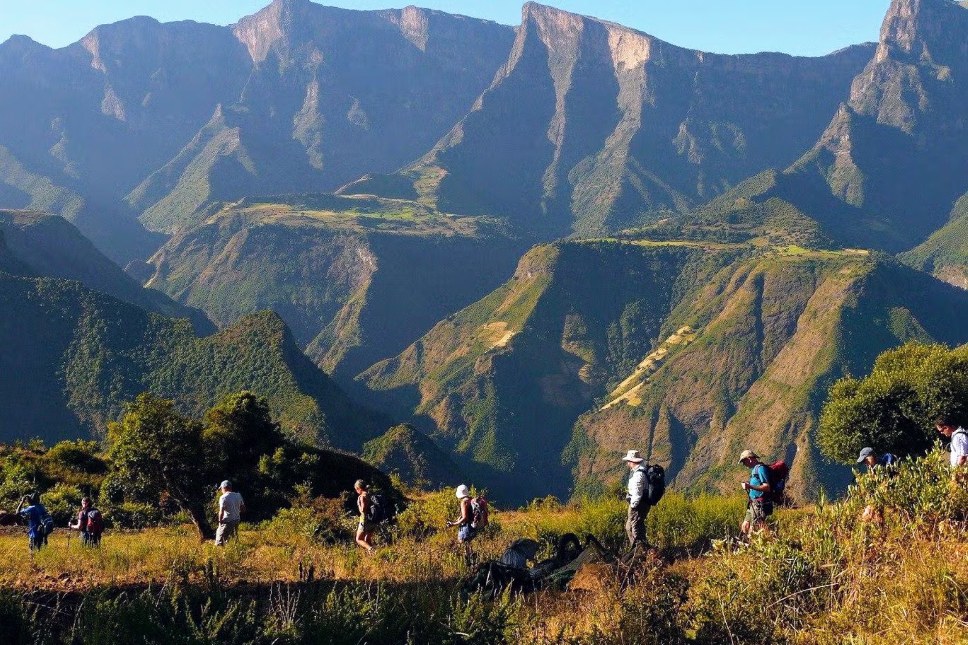
The Majestic Ethiopian Highlands
Click any image to explore the diverse landscapes, ancient architecture, and vibrant cultures across the country.
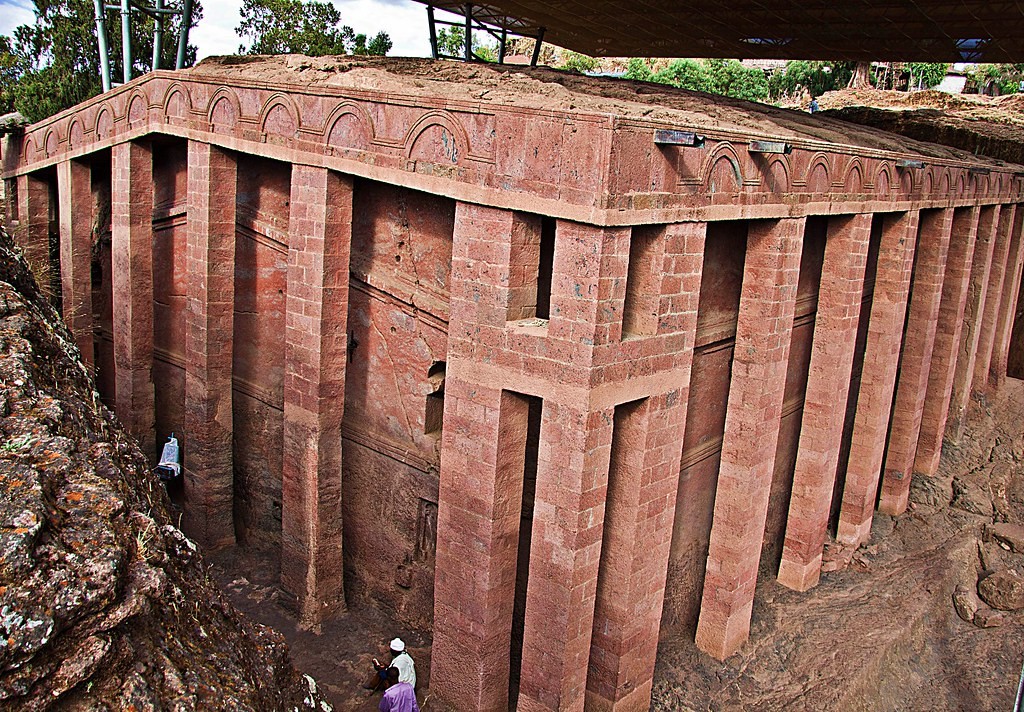
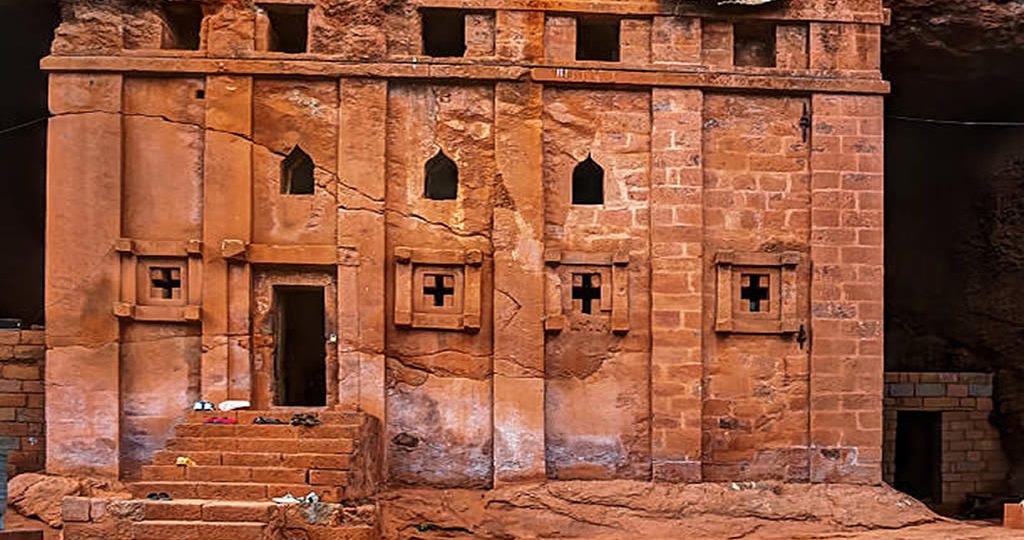
The Rock-Hewn Churches of Lalibela
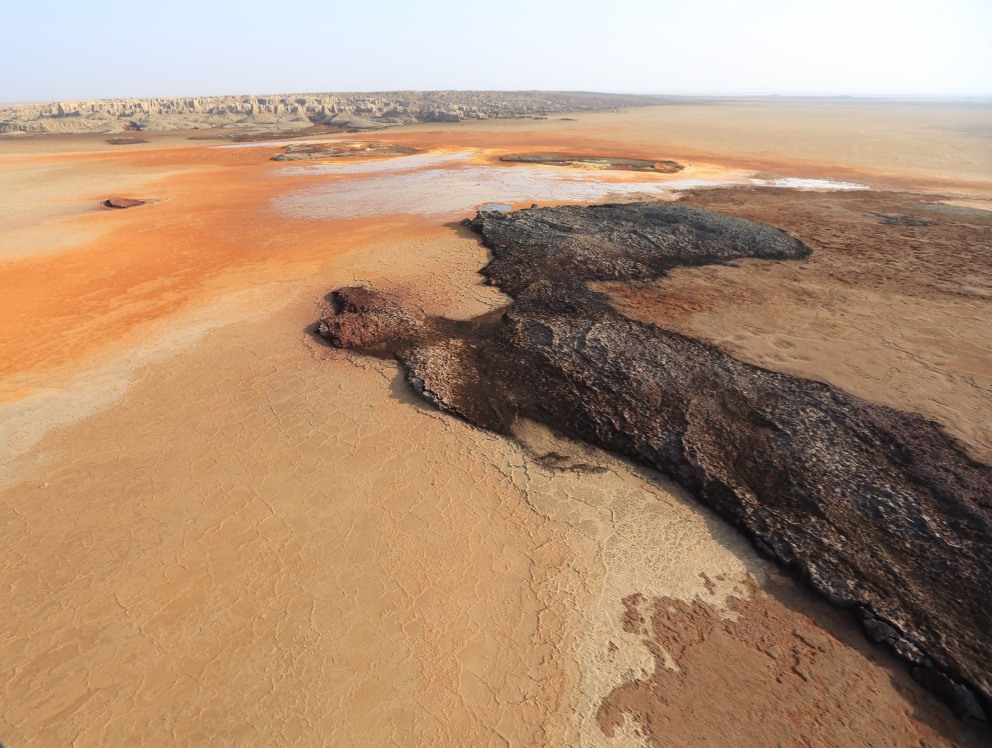
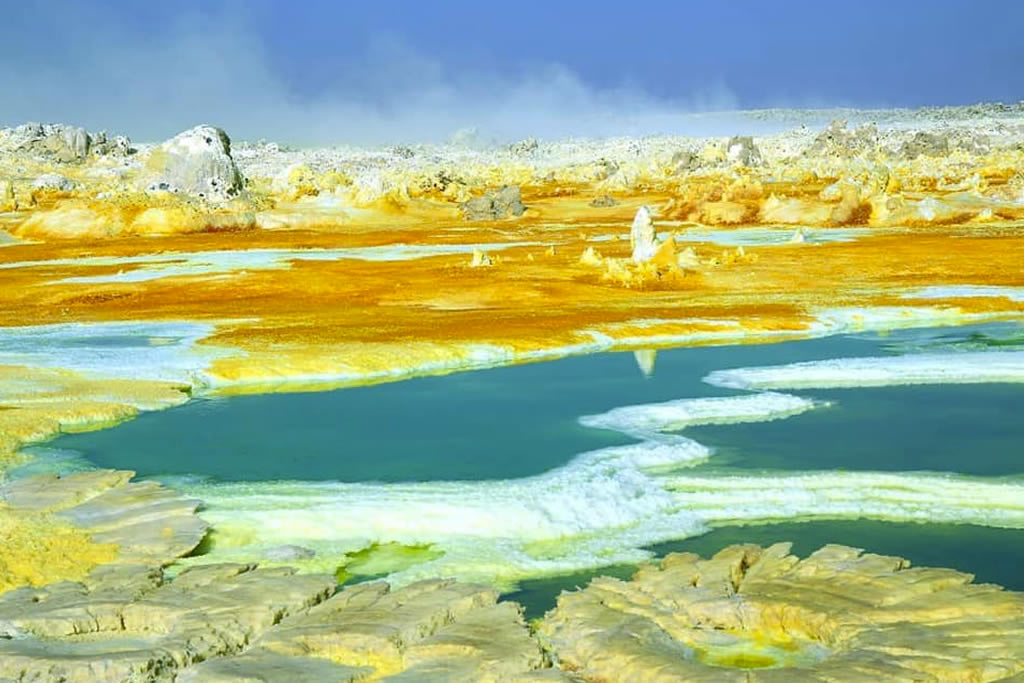
The Alien Landscapes of Danakil
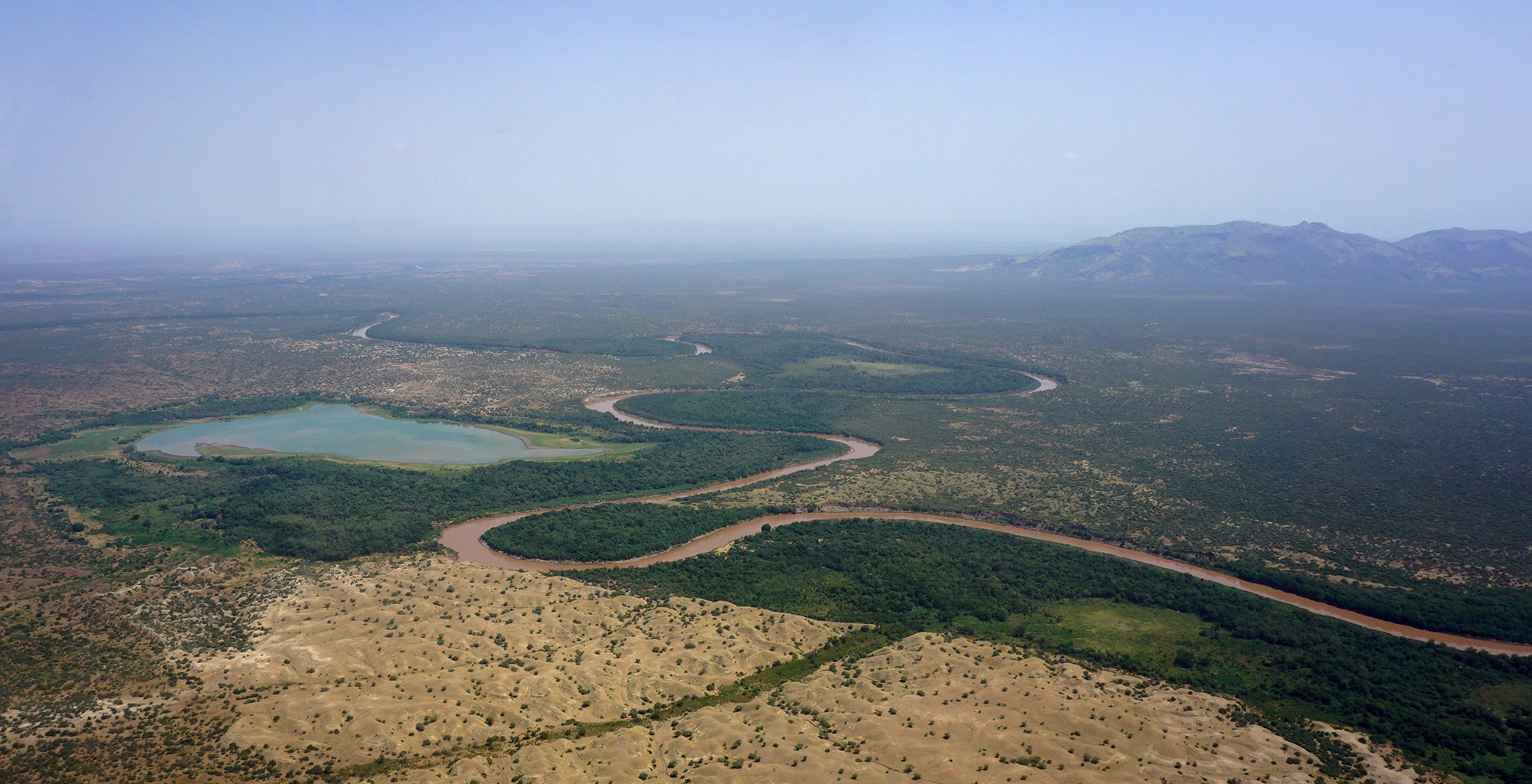
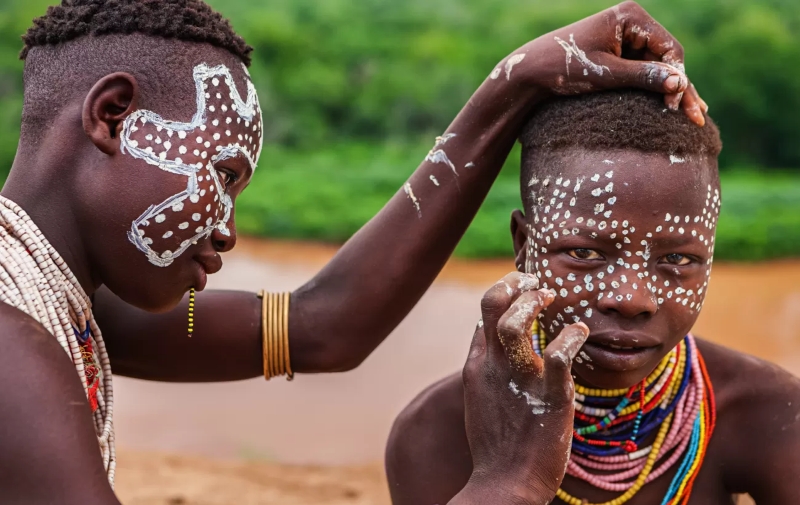
Vibrant Cultures of the Omo Valley
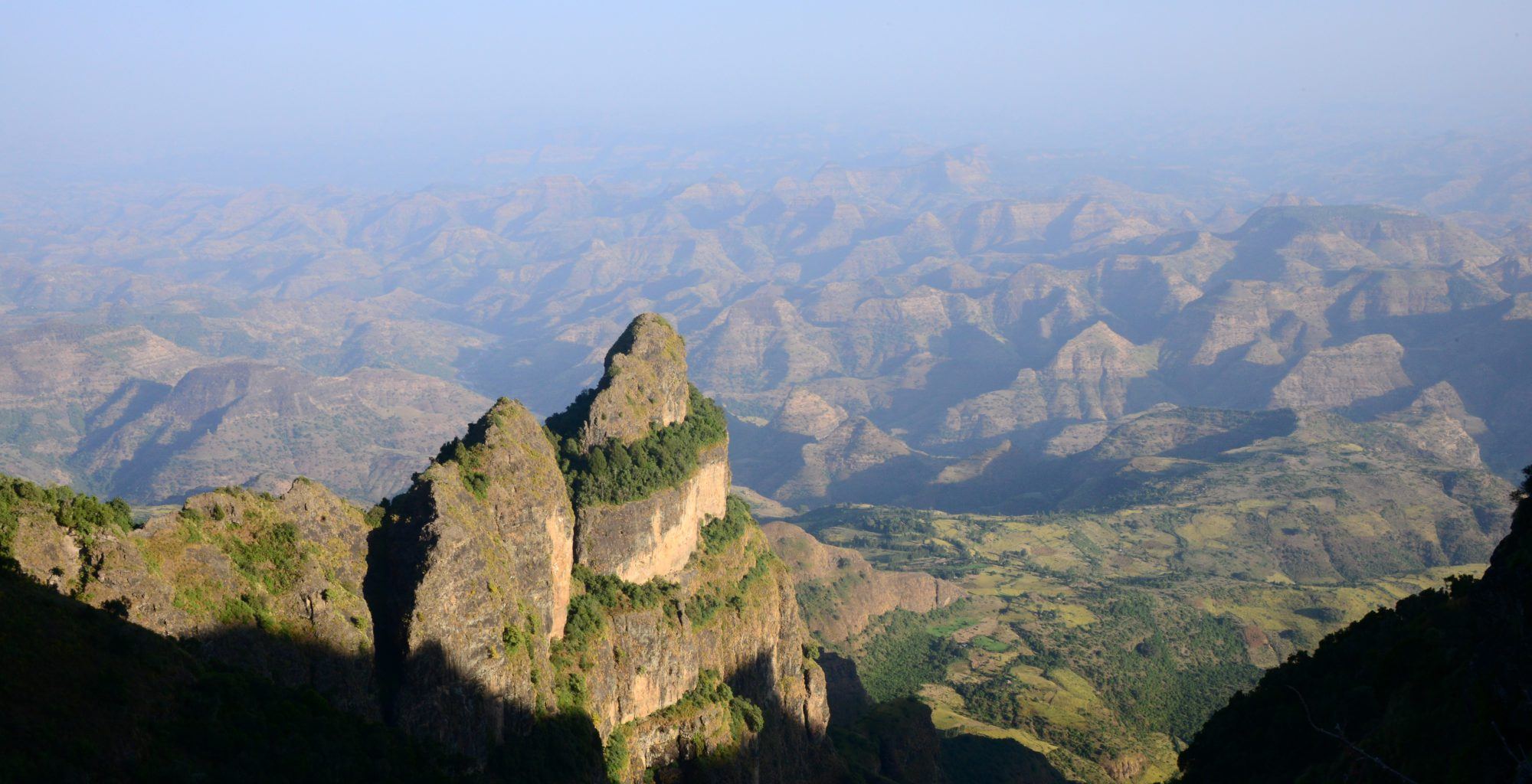
The Roof of Africa: Simien Mountains
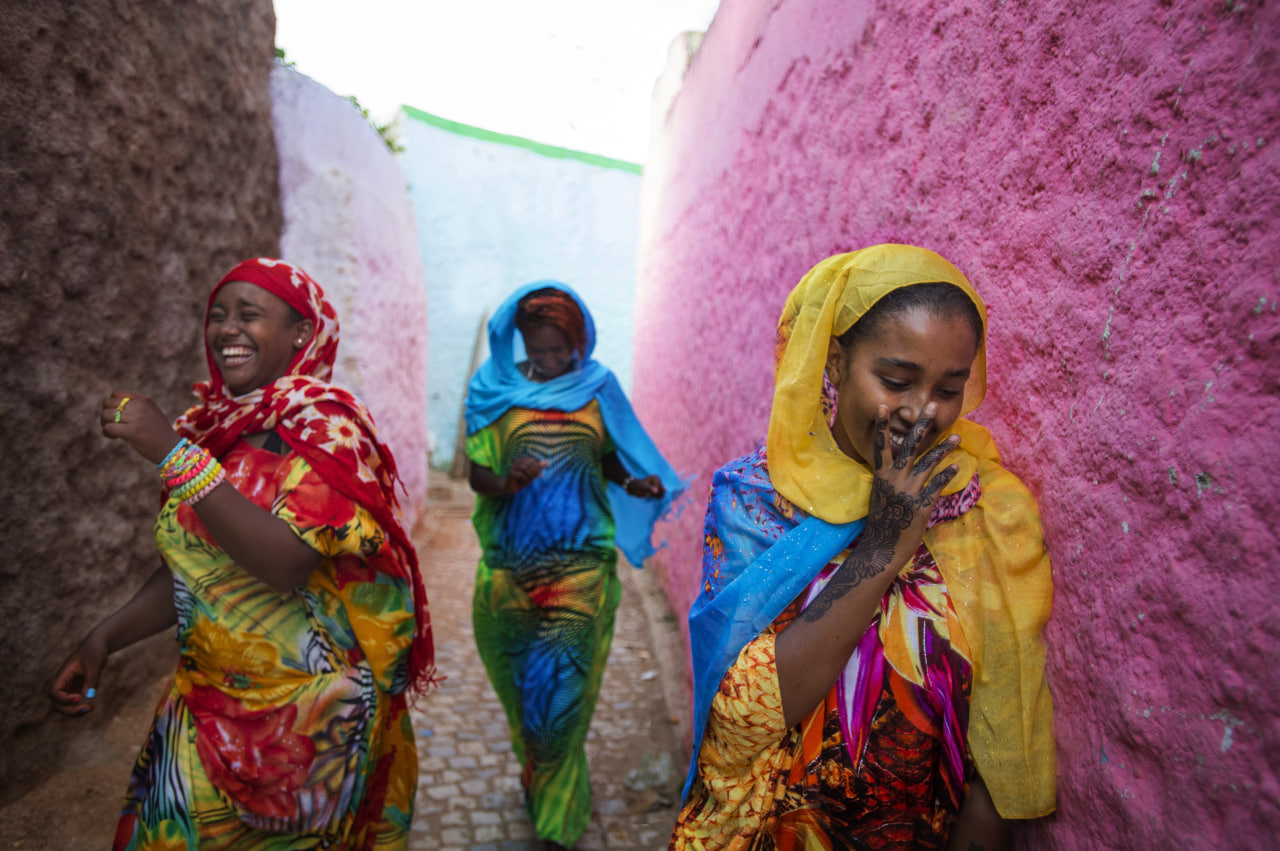
The Ancient Walled City of Harar
Explore the Country
Select an architectural, geological, or cultural circuit below to preview custom regional route connections, dynamic paths, and curated track metrics.
Top Attractions
From the ancient churches of the historic north to the extreme geology of the Afar and the living cultures of the deep south, Ethiopia offers a profound range of destinations that blend civilisation, faith, and raw natural wonder unlike anywhere else on earth.
Amhara Region · UNESCO World Heritage Site
Carved directly from the living red volcanic rock of the Ethiopian highlands between the 12th and 13th centuries, Lalibela's eleven monolithic churches represent one of the greatest feats of human craftsmanship ever undertaken. Commissioned by King Lalibela to create a new Jerusalem on African soil, these subterranean sanctuaries were hewn downward, roof-first, so that their rooftops sit flush with the surrounding ground. Connecting courtyards, ceremonial trenches, and dark tunnels link the churches into a single sacred city beneath the earth. Bete Giyorgis, carved in the perfect form of a Greek cross, is the pinnacle of the complex. Unlike so many ancient monuments reduced to mere ruins, Lalibela remains a vibrant, breathing centre of faith, thronged by white-robed pilgrims throughout the year.
Tigray Region · UNESCO World Heritage Site
At its height between the 1st and 7th centuries AD, the Aksumite Empire was one of the four great powers of the ancient world, ranked alongside Rome, Persia, and China by a contemporary Roman diplomat. Today, the city of Aksum preserves the physical legacy of that extraordinary civilisation. Towering granite stelae, the tallest of which once stood over 30 metres, were carved and erected to mark the tombs of the empire's rulers — a feat of engineering that still defies easy explanation. Beneath the ground, elaborate underground tomb complexes remain partially accessible to visitors. At the city's heart stands the Church of St. Mary of Zion, Ethiopia's most sacred site and, by tradition, the final resting place of the original Ark of the Covenant, returned from Jerusalem by the son of King Solomon and the Queen of Sheba.
Amhara Region · UNESCO World Heritage Site
Founded in 1636 by Emperor Fasilides, Gondar served as the royal capital of the Ethiopian Empire for more than two centuries, and its architecture reflects the remarkable cultural crossroads at which it stood. The Royal Enclosure, Fasil Ghebbi, is a sprawling walled compound containing six distinct castles and palaces, each built by successive emperors and each bearing a fascinating fusion of Ethiopian, Portuguese, Indian, and Moorish design influences. Stone banqueting halls, raised royal baths, and ornate gateways all speak to a court of considerable sophistication and international connection. A short distance from the enclosure, the Debre Berhan Selassie Church offers one of Ethiopia's most celebrated interior spaces: its entire ceiling covered by a sublime painting of 104 cherubic, winged faces gazing downward upon the faithful.
Amhara Region · Ethiopia's Largest Lake
Ethiopia's largest lake, Tana, cradles a remarkable secret across its island-scattered waters: more than twenty ancient monastery churches, some dating to the 14th century, which served as sanctuaries for Ethiopia's most precious religious treasures during times of invasion and upheaval. Accessible only by boat, these remote island monasteries preserve illuminated manuscripts, ornate processional crosses, and vivid religious murals that have survived for centuries in remarkable condition. From the lake's southern shore, the Blue Nile — the river that carries roughly 85 per cent of the Nile's total flow — departs on its great journey northward. Just a short drive away, the Blue Nile Falls, locally known as Tis Issat ("Water That Smokes"), plunge over a wide volcanic basalt ledge in a dramatic curtain of mist and thunder.
Tigray Region · Over 120 Rock-Hewn Churches
While Lalibela is the most celebrated expression of Ethiopia's rock-hewn church tradition, Tigray contains its deepest roots and its most dramatic examples. Scattered across an otherworldly landscape of sandstone cliffs and flat-topped mountains, more than 120 ancient churches were carved into sheer cliff faces, tucked into narrow ledges high above the valley floors, or cut into the interiors of isolated rock formations. The most iconic, Abuna Yemata Guh, requires a vertiginous barefoot climb up a sheer rock face and a nerve-testing traverse of a narrow ledge before revealing a perfectly preserved interior of intricate 5th-century frescoes. These churches were deliberately placed at altitude both to deter attackers and to bring worshippers physically closer to the heavens — a theology made literal in stone and sky.
Harari Region · UNESCO World Heritage Site
Enclosed within ancient fortified walls pierced by five historic gates, Harar Jugol has stood as a centre of Islamic scholarship, trade, and culture for nearly a thousand years. Considered by many Muslims to be the fourth holiest city in the Islamic world, the old city contains 82 mosques and 102 shrines compressed into a dense, colourful labyrinth of narrow alleyways — a street plan so complex it has barely changed in centuries. Its vibrant markets spill over with spices, weavings, and coffee, the latter intimately associated with this region. After dark, the city reveals one of Africa's most singular traditions: the Hyena Men of Harar, who emerge outside the city walls each night to call wild spotted hyenas by name and feed them scraps of meat by hand, a ritual believed to ward off evil and that has been observed, unbroken, for over 500 years.
Amhara Region · Highest Peak: Ras Dashen (4,620m)
Sculpted over millions of years by volcanic uplift and erosion, the Simien Mountains present a landscape of staggering vertical drama: sheer escarpments dropping a thousand metres into valleys far below, jagged basalt pinnacles rising from grassy plateaus, and a horizon broken by peaks that dwarf those of the Alps. The park's trekking routes — among the finest in Africa — wind through high-altitude moorlands where giant lobelias and heather trees grow to extraordinary sizes. The mountains are equally celebrated for their endemic wildlife, found nowhere else on earth. Massive troops of Gelada Monkeys, the last surviving grass-eating primates, graze peaceably on the plateau edges. The critically endangered Walia Ibex balances with impossible grace on sheer cliff faces. And the ghostly, rust-coloured Ethiopian Wolf hunts rodents in the alpine meadows at dawn.
Oromia Region · Sanetti Plateau & Harenna Forest
The Bale Mountains National Park encompasses one of the most ecologically significant high-altitude landscapes in Africa, from the Sanetti Plateau — a vast, frost-covered moorland above 4,000 metres that forms the largest continuous Afroalpine habitat on the continent — to the lush, mist-draped Harenna Forest, the largest cloud forest in Ethiopia, which descends in dense canopy down the mountain's southern flanks. The Sanetti Plateau is the world's most reliable place to observe the Ethiopian Wolf, with packs of this critically endangered canid hunting giant mole rats across open moorland at dawn. Below, the Harenna shelters the endemic Bale Monkey, wild forest coffee growing naturally beneath the canopy, and a remarkable diversity of birds. The park's water systems feed rivers crucial to millions of people downstream.
Afar Region · -125 Metres Below Sea Level
The Danakil Depression is one of the most extreme environments on the surface of the earth: a geological cauldron located at the junction of three tectonic plates that are slowly pulling apart, creating new land in real time. Sinking to more than 125 metres below sea level, average temperatures regularly exceed 50°C, earning it the title of the hottest inhabited place on the planet. Yet its raw visual spectacle is unlike anything else in the natural world. The Erta Ale shield volcano hosts a persistently active lava lake — one of only a handful in existence — visible in its full molten fury from the rim at night. At Dallol, mineral-rich hydrothermal vents push scalding brines to the surface, forming an acid landscape of impossible neon yellows, greens, and oranges. Across the vast salt pans of Lake Karum, camel caravans still traverse the ancient salt trade routes of the Afar people, exactly as they have for a thousand years.
Southern Nations, Nationalities, and Peoples' Region
The Lower Omo Valley occupies a unique position in both human prehistory and living cultural diversity. Its deep fossil-bearing sediments have yielded some of the most significant early hominid discoveries in the world, establishing the region as a foundational site in the story of human origins. Yet the Omo is equally remarkable for the present: home to more than fifteen distinct indigenous communities, each with their own language, ceremonial life, and visual identity. The Mursi are celebrated for the striking clay lip plates worn by women. The Hamar are known for the dramatic bull-jumping coming-of-age ceremony and their ochre-lacquered hair. The Karo produce extraordinary body and face painting using white chalk, red ochre, and charcoal. A journey through the Omo Valley is an encounter with a way of life shaped over millennia by the rhythms of the river, the land, and the cattle.
Gurage Zone, Oromia · UNESCO World Heritage Site
Set in a quiet field in the Gurage Zone, roughly 90 kilometres south of Addis Ababa, Tiya is one of the most archaeologically intriguing sites in sub-Saharan Africa. The field contains 36 large, ancient standing stones, of which 32 bear deeply carved, abstract symbols — swords, stylised human figures, and other forms whose precise meaning remains a subject of scholarly debate. Excavations around the stelae have confirmed that they mark ancient mass burial grounds, with human skeletal remains beneath multiple stones, suggesting a medieval culture of considerable ceremonial complexity. The isolation of the site, the scale of the carved stones, and the persistent mystery of the symbols make Tiya a sobering and thought-provoking destination — one that raises profound questions about the peoples of ancient southern Ethiopia who left no written record beyond these standing stones.
Afar & Southern Regions · UNESCO World Heritage Sites
Few places on earth carry the weight of the Awash and Omo valleys in the story of humanity. The Lower Valley of the Awash, a UNESCO World Heritage site, is where the remains of Australopithecus afarensis — popularly known as "Lucy" — were unearthed in 1974, pushing back the confirmed record of human ancestors to 3.2 million years and fundamentally reshaping our understanding of human evolution. The Lower Valley of the Omo, a separate UNESCO site to the south, has yielded fossil evidence dating back over four million years, including stone tools and hominid remains that together represent one of the most continuous sequences of human prehistory known to science. For travellers interested in deep time and the very origins of the human story, these two valleys are, quite simply, unmatched anywhere on the planet.
Southern Nations Region · UNESCO World Heritage Site
Recognised by UNESCO in 2011 as a cultural landscape of outstanding universal value, the Konso region of southern Ethiopia presents a living demonstration of human ingenuity in the face of environmental challenge. Over many generations, the Konso people have sculpted their steep, rocky hillsides into a dense, intricate system of dry-stone terraces — one of the most sophisticated examples of traditional agricultural engineering in Africa. These terraces, still actively farmed today, prevent erosion, retain water, and allow cultivation of land that would otherwise be entirely unproductive. The Konso also live in remarkable walled town settlements, organised around communal spaces and age-grade meeting houses, and are known for their striking Waka funerary statues: stylised wooden figures erected to honour warriors and important community members.
Southern Nations Region · UNESCO World Heritage Site
Inscribed on the UNESCO World Heritage list in 2023, the Gedeo Cultural Landscape occupies the fertile highland slopes of the Gedeo Zone in southern Ethiopia, representing one of the world's finest examples of traditional agroforestry — the sophisticated, centuries-old practice of managing multi-layered forest and crop systems simultaneously rather than clearing land for monoculture. The Gedeo people maintain a dense, multi-storey canopy of trees, shade plants, coffee, enset (the "false banana," a dietary staple), vegetables, and root crops in an integrated system that is both highly productive and extraordinarily biodiverse. This landscape is not a museum artefact: it is a living, working land-use system supporting hundreds of thousands of people and offering lessons in sustainable agriculture that are increasingly relevant to the global challenges of the present century.
Oromia Region · UNESCO World Heritage Site
Located approximately 50 kilometres southwest of Addis Ababa on the banks of the Awash River, Melka Kunture is one of the most significant prehistoric sites in Africa. A remarkable sequence of archaeological deposits spanning more than two million years of continuous human activity has been identified at this single location, making it an unparalleled record of Palaeolithic technology and early human behaviour. Excavations here have uncovered vast assemblages of stone tools representing successive technological traditions — from the earliest Oldowan pebble tools to more refined Acheulean handaxes — alongside fossil remains of the early humans who made them. A site museum presents the key finds and contextualises the chronology of discoveries, offering visitors an accessible introduction to the extraordinary depth of human prehistory that underlies the entire Ethiopian landscape.
Bespoke Journeys
Before You Go
Ethiopia is vast. The most efficient way to link major destinations like Lalibela, Gondar, and the Omo Valley is via Ethiopian Airlines' extensive and reliable domestic flight network.
Due to varying altitudes, you will experience diverse climates. Expect freezing nights in the Simien/Bale Mountains, temperate days in Addis/Lalibela, and extreme heat in Danakil.
The general dry season runs from late September to May, making it the best time for touring. Major festivals like Timkat (January) and Meskel (September) are incredible times to visit.
Most international tourists can easily apply for a 30-day or 90-day tourist e-Visa online at evisa.gov.et prior to arrival. Your passport must be valid for 6 months.
Whether you want to trek the highest peaks, meet ancient tribes, or explore rock-hewn wonders, let our local experts build your perfect itinerary.